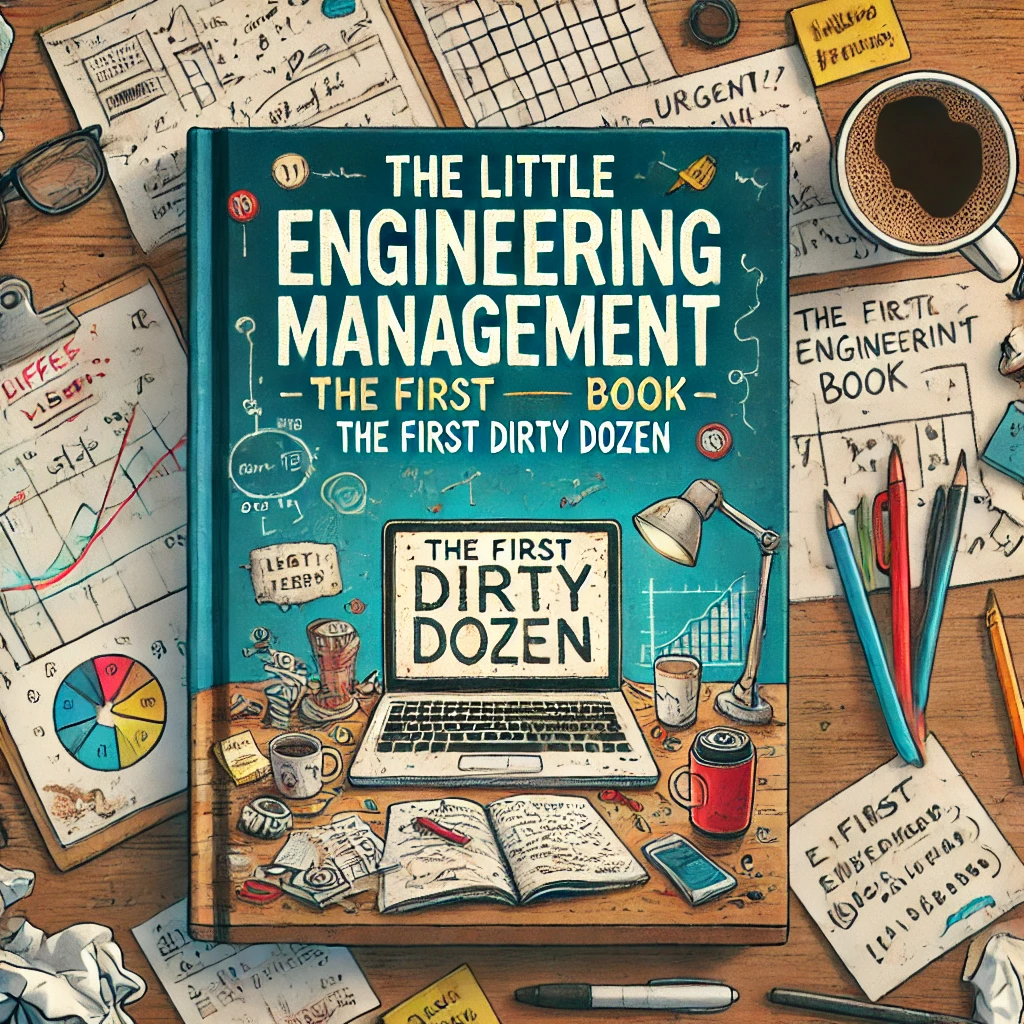
Engineering Management: The First Dirty Dozen
A practical handbook for first-line engineering managers at early-stage startups — from hiring your first engineer to scaling past fifty.
Why this book exists
I wrote this handbook over several years as a collection of lessons learned managing engineering teams at early-stage startups (0–50 engineers). It was originally meant as a consistency document for new first-line managers — a way to align on how we lead people, run projects, and make resourcing decisions — so the org could scale without descending into chaos every time we hired another manager. But my notes grew and grew, and I decided to collect them in this small handbook.
As of 2026, AI is dramatically changing how we develop, ship, and support software products — but one thing I’m convinced isn’t going to change is how we manage people, which is the main focus of this book.
It is a working manager’s manual, not a theory book. You won’t find much debate over which leadership framework is “correct.” You’ll find what I did, why, and what I would do again.
You lead people and manage things. If you remember nothing else from this book, remember that.
Who this is for
- New first-line managers — engineers who just got promoted or were hired as EMs and need an operating manual for the first two years.
- Experienced managers joining a startup — comfortable managing at scale, but new to the compressed, under-supported realities of a 0–50 engineer org.
- Founders and CTOs building their first engineering team and deciding how they want it to run.
If you manage 200+ engineers across multiple layers, this book will feel too tactical. The Recommended Reading section points you toward the books that go deeper.
How to use it
Read it start-to-finish the first time — the parts build on each other. After that, it’s a reference. The First 90 Days chapter is the most-bookmarked page for new EMs. The chapters on Performance & Development and Team Structure are the ones experienced managers come back to most.
Fork it. Adapt it. Disagree with it. Management is not about copying someone else’s playbook — it’s about building your own and being deliberate about it.
What’s inside
The book is organized into four parts, in the order you’ll actually need them:
- Part I — Foundations: What management is, what it isn’t, and how to survive your first 90 days.
- Part II — People & Teams: Fundamentals, hiring, onboarding, performance, development, and how to structure teams so the work actually flows.
- Part III — Building the Product: Product, projects, operations, communication, and the new realities of managing in the AI era.
- Part IV — Resources & Infrastructure: Budgets and headcount, CI/CD and DevOps, security and compliance.
Plus a References appendix with every book, framework, and tool I found worth pointing to.
This is a living document. As your organization grows and evolves, adapt these principles accordingly. Embrace change, continuously strive for improvement, and feel free to fork this handbook to meet your own context.
A note to new managers
Managing people is hard, and the mistakes can have lasting impact. Unlike product development, you cannot A/B test management decisions — so learning from other people’s experience matters more than usual. That’s most of what this book is.
If you feel like an imposter, you’re in good company. A little imposter syndrome is healthy: it keeps you listening. Too much of it and you’ll hesitate when your team needs a decision. Pick the threshold where it makes you thoughtful but not paralyzed, and start there.